A-Kavach– The Biological Shield That Protects Your Joints From Arthritis

A-Kavach™ – The Biological  shield That Protects Your Joints From Arthritis

Arthritis is not just “wear and tear.” For decades, patients were told their cartilage simply eroded because of aging or excessive load. But modern joint biology tells a more complete story:

**Your knee is under continuous chemical attack.**

Inside an arthritic joint, destructive enzymes, inflammatory molecules, and oxidative stress work like microscopic knives, cutting through cartilage and accelerating its breakdown — often long before your X-ray shows severe change. That’s why some patients with only mild X-ray findings have significant pain, and some with advanced-looking X-rays have very little.

**A-Kavach™** is designed to interrupt that chemical attack — as the first step in a two-part biological strategy.

## Why “Wear and Tear” Alone Doesn’t Explain Arthritis

For years, osteoarthritis was treated as a purely mechanical problem — a hinge wearing down. But we now understand:

– Cartilage breakdown is driven substantially by biochemical inflammation
– Enzymes such as MMPs and ADAMTS, along with inflammatory cytokines, break down collagen and proteoglycans in cartilage
– This process can begin long before it’s visible on an X-ray
– Mechanical load is a contributing factor — but the chemical cascade is what drives ongoing destruction

A-Kavach™ is built specifically to interrupt that chemical cascade — before more cartilage is lost.

What Is A-Kavach™?

A-Kavach™ is an autologous (from your own blood) biological shield developed at the **Madras Joint Rejuvenation Centre (MJRC)**, Kasthuri Hospital, Chennai. It is concentrated from your own platelet-poor plasma and is rich in alpha-2 macroglobulin (A2M) — a naturally occurring protein that neutralizes the destructive enzymes driving cartilage breakdown.

**A-Kavach™ is the first step, injected before anything else, because its protective action needs to take effect immediately.** Once the joint’s chemical environment is no longer actively hostile, we follow with the **PRASAD™ Protocol** — our platelet-rich, stromal, and marrow-derived biologic combination — to work within a joint that is no longer under active biochemical attack.

*(You can read the full explanation of the PRASAD™ Protocol here →
A-Kavach™’s role, specifically:

1. Neutralizing destructive enzymes

A-Kavach™ binds and inactivates excess proteases and inflammatory molecules circulating in the joint — slowing the chemical erosion of cartilage.

2. Reducing the inflammatory load on the joint

By lowering the concentration of destructive molecules, A-Kavach™ helps create a less hostile environment for the joint tissues that remain.
3. Addressing joint pain generators

A significant share of arthritic pain comes from synovial inflammation, bone marrow lesions, and nerve sensitization within the joint — not from cartilage itself, which has no nerve supply. By calming the inflammatory drivers, A-Kavach™ can contribute to reducing this pain signal, though it works alongside, not in place of, a full biologic strategy.

Who Is A-Kavach™ For?

A-Kavach™ may be appropriate for patients who:

– Have early to moderate osteoarthritis
– Have pain that seems disproportionate to X-ray severity
– Want to explore joint preservation before considering knee replacement
– Have signs of active inflammation within the joint
– Are looking to maintain mobility and function over the coming years

Patients with metabolic syndrome, obesity, or chronic low-grade inflammation may benefit in particular, since these conditions tend to keep the joint’s chemical environment more hostile.

*(Candidacy is assessed individually — a consultation is the only way to know if A-Kavach™ and the PRASAD™ Protocol are appropriate for your joint.)*

Why Timing Matters

By the time advanced arthritis is visible on X-ray, a great deal of cartilage is already lost. But the chemical destruction driving that loss often begins years earlier. A-Kavach™ is designed to intervene while there is still cartilage worth protecting.

A-Kavach™ in Context

| Approach | What It Does | Limitations |
| Painkillers | Reduce pain sensation | Do not slow underlying joint damage |
| Steroid injections | Fast, short-term relief | Repeated use may accelerate cartilage loss |
| Physiotherapy | Improves joint mechanics and strength | Does not address the biochemical drivers of destruction |
| Knee replacement | Definitive solution for end-stage disease | Major surgery; not appropriate for early-to-moderate OA |
| **A-Kavach™ + PRASAD™** | Targets the chemical drivers of cartilage loss and supports a healthier joint environment | Does not regenerate cartilage — no established treatment does |

What A-Kavach™ Does Not Claim to Do

To be direct: **A-Kavach™ does not regenerate cartilage. No established treatment today reverses cartilage loss.** What it does is protect the cartilage you still have, by addressing the chemical destruction driving further loss — and prepare the joint for the regenerative work of the PRASAD™ Protocol that follows.

What Patients Commonly Report

Individual results vary, and outcomes should be discussed with your treating doctor. Patients who respond well to the A-Kavach™ + PRASAD™ approach commonly report improvements in pain, walking tolerance, and night-time comfort over the following weeks to months.

Take the First Step

Arthritis progression is not automatically inevitable — the chemical processes driving it can often be influenced, particularly when addressed early.

**A-Kavach™ is the shield. PRASAD™ is what follows once the joint is ready.**

To learn more or book a consultation:

📞 095661 43108
✉️ drvenkatjoints@gmail.com
🌐 drakvenkat.com/contact

*Dr. A.K. Venkatachalam, FRCS — Madras Joint Rejuvenation Centre, Kasthuri Hospital, West Tambaram, Chennai*
The Scientific Evidence Behind Inflammation-First Knee Arthritis Care

  1. Scientific Basis of Inflammation-First Knee Arthritis Care

This page summarises the scientific evidence supporting an inflammation-first approach to knee osteoarthritis, as presented in the Inflammation Pillar Video. Each section corresponds directly to a key statement from the script, supported by peer-reviewed research.

1. Knee Arthritis Is Not Just Wear and Tear

Scientific Proof

Osteoarthritis is now recognised as a whole-joint inflammatory disease involving the synovium, cartilage, subchondral bone, ligaments, and infrapatellar fat pad.

Key References

  • Robinson WH et al., Nature Reviews Rheumatology – Osteoarthritis as an inflammatory disease
  • Berenbaum F, Osteoarthritis and Cartilage – Low-grade chronic inflammation in OA progression

Consensus

Mechanical damage alone does not explain pain severity or disease progression.


2. Inflammation Inside the Joint Drives Pain, Stiffness, and Progression

Scientific Proof

  • Synovitis strongly correlates with pain severity
  • Associated with effusion and stiffness
  • Predicts faster cartilage loss

Key References

  • Hill CL et al., Annals of the Rheumatic Diseases
  • Felson DT et al., Arthritis & Rheumatology

Consensus

Pain tracks inflammatory activity, not X-ray grade.


3. Two Patients With the Same X-Ray Can Have Very Different Pain

Scientific Proof

Radiographic severity correlates poorly with clinical symptoms.

Key References

  • Bedson J, Croft PR, Rheumatology
  • Hannan MT et al., Arthritis & Rheumatism

Consensus

Imaging underestimates biological disease activity.


4. Exercise Improves Support, Not Inflammation

Scientific Proof

  • Improves muscle strength and neuromuscular control
  • Does not suppress synovial cytokines when inflammation is active

Key References

  • Henriksen M et al., Osteoarthritis and Cartilage
  • Baker KR et al., Arthritis Care & Research

Consensus

Exercise is necessary but biologically insufficient when inflammation is uncontrolled.


5. Why Patients Plateau Despite Good Physiotherapy

Scientific Proof

  • Active synovitis predicts poor rehabilitation response
  • Associated with pain flares after loading
  • Reduces tolerance to strengthening

Key References

  • Scanzello CR et al., Clinical Orthopaedics and Related Research
  • Schaible HG, Nature Reviews Rheumatology

Consensus

Plateaus are biological, not motivational failures.


6. Painkillers Suppress Symptoms, Not Disease Biology

Scientific Proof

  • NSAIDs reduce pain temporarily
  • Do not halt cartilage degeneration
  • Do not modify disease progression

Key References

  • Zhang W et al., OARSI Guidelines
  • Hochberg MC et al., Arthritis Care & Research

Consensus

Symptom relief does not equal disease control.


7. Sequence Matters: Calm Inflammation Before Strengthening

Scientific Proof

  • Reducing inflammatory load improves pain thresholds
  • Improves exercise tolerance
  • Enhances functional outcomes

Key References

  • Atukorala I et al., Arthritis Research & Therapy
  • Bennell KL et al., British Journal of Sports Medicine

Consensus

Biological readiness determines rehabilitation success.


8. Joint Preservation Focuses on Biology, Not Just Mechanics

Scientific Proof

Modern OA management emphasises early biological modulation, load management, and individualised treatment sequencing.

Key References

  • Loeser RF et al., Osteoarthritis and Cartilage
  • Hunter DJ, The Lancet

Consensus

Joint preservation is proactive, not passive.


9. Inflammation Is Treatable

Scientific Proof

  • Inflammation in OA is measurable
  • Inflammation is modifiable
  • Inflammation is clinically meaningful

Key References

  • Mathiessen A, Conaghan PG, Arthritis Research & Therapy
  • Scanzello CR, Goldring SR, Arthritis & Rheumatology

Consensus

Osteoarthritis inflammation is manageable, not inevitable.

See the video here -https://youtu.be/IJFPdKUwpc0?si=5lN4781-zEmo3Xk0

FAQ’s

Q: Is knee osteoarthritis only caused by wear and tear?

A: No. Current research shows osteoarthritis is a whole-joint inflammatory disease. Mechanical wear alone does not explain pain severity or progression.

Q: Why does knee pain not match X-ray findings?

A: Pain correlates more strongly with synovial inflammation than with radiographic cartilage loss. X-rays underestimate biological disease activity.

Q: Does exercise reduce inflammation in knee arthritis?

A: Exercise improves strength and support but does not reliably suppress active synovial inflammation when it is present.

Q: Why do some patients plateau despite physiotherapy?

A: Active inflammation sensitises pain pathways and limits tolerance to loading, leading to biological—not motivational—plateaus.

Q: Are painkillers disease-modifying in knee arthritis?

A: No. NSAIDs reduce symptoms temporarily but do not alter the underlying disease process or progression.

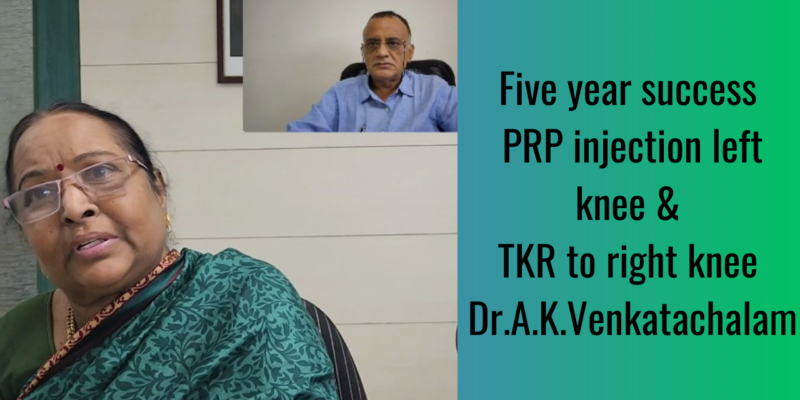
Five year success of PRP injection to left knee & TKR to right knee Dr.A.K.Venkatachalam

PRP treatment knee arthritis 5 year success story

PRP treatment knee arthritis success story

Long-Term Pain Relief and Functional Improvement:

  • 70-year-old  Mrs.Swarnalatha  underwent PRP injections five years ago for moderate knee osteoarthritis. She reports sustained pain relief and increased joint function, allowing her to participate in activities he previously avoided due to pain.
  • She had a knee replacement in one knee by Dr.A.K.Venkatachalam
  •  In this video, a seventy-three-year-old lady shares her 5-year success of PRP injection to left knee and Total knee replacement to right knee for OA knee. Her surgery was in early 2019 and the original diagnosis was OA knee. She was treated with a PRP injection in her left knee and a total knee replacement in her right knee. The results are as follows: 1. PRP injection: After injection, she had improved range of motion (ROM), less pain, and improved quality of life. 2. Total knee replacement to right knee: After surgery, she had improved range of motion (ROM), less pain, and improved quality of life. She also regained her walking speed and strength.

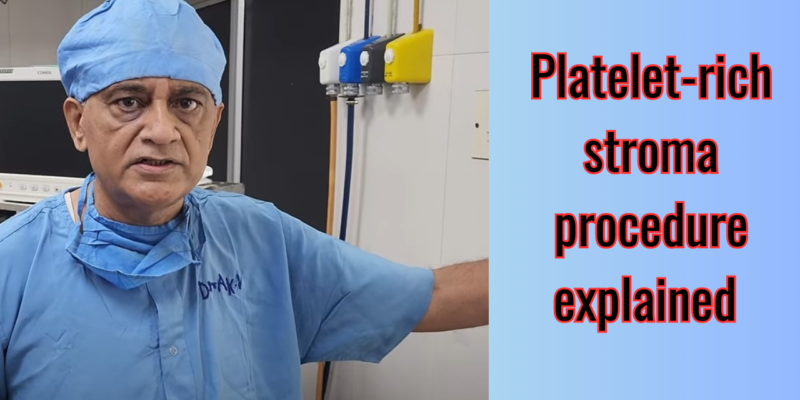
Platelet-rich stroma procedure explained

What is Platelet rich stroma (PRS) treatment for knee osteoarthritis?

Platelet-rich stroma treatment for knee osteoarthritis

Osteoarthritis (OA) is a degenerative joint disease that affects millions of people worldwide. It causes pain, stiffness, and reduced mobility in the affected joints. One of the most common sites of OA is the knee, which bears a lot of weight and stress during daily activities.

There is no cure for OA, but there are various treatments that can help manage the symptoms and slow down the progression of the disease. One of these treatments is platelet-rich stroma (PRS), which is a type of regenerative medicine that uses the patient’s own blood cells to stimulate the healing and repair of damaged tissues.

What is Platelet-rich stroma treatment?

PRS is derived from the patient’s blood and adipose tissue which are drawn and processed in a high-end device that separates and concentrates the platelets and SVF. The PRS is then injected into the affected knee joint under ultrasound guidance, where it releases various bioactive molecules that promote inflammation, angiogenesis, and tissue regeneration.

To explain how PRS works, we need to understand how platelets and growth factors function in the body. Platelets are small blood cells that are involved in blood clotting and wound healing. They contain granules that store various growth factors, which are proteins that can signal other cells to grow, divide, or differentiate. Growth factors can also modulate inflammation, which is a natural response to injury or infection.

When PRS is injected into the knee joint, it creates a microenvironment that mimics a wound site. The platelets become activated and release their growth factors, which attract and activate other cells such as stem cells, fibroblasts, and endothelial cells. These cells then start to produce new collagen, blood vessels, and cartilage matrix, which can restore some of the lost tissue function and structure.

PRS has been shown to have beneficial effects on knee OA in several clinical trials. It can reduce pain, improve function, and enhance the quality of life for patients with mild to moderate OA. It can also delay or prevent the need for more invasive procedures such as joint replacement surgery.

PRS is a safe and minimally invasive procedure that can be performed in an outpatient setting. It has few side effects and a low risk of infection or rejection.

If you are suffering from knee OA and are interested in PRS, you should consult Dr. A.K. Venkatachalam and discuss the pros and cons of this treatment option. PRS may not be suitable for everyone as it depends on the severity of OA and individual expectations.

References:

: Venkatachalam A.K. Knee osteoarthritis treatment Platelet-rich stroma India. Ortho Biologic Surgery India Blog 2023; https://orthobiologicsurgeryindia.com/knee-osteoarthritis-treatment-with-platelet-rich-stroma-in-india/

: Venkatachalam A.K. Platelet-rich stroma procedure Knee arthritis Chennai. Ortho Biologic Surgery India Blog 2023; https://orthobiologicsurgeryindia.com/platelet-rich-stroma-procedure-explained-treatment-for-knee-oa/

: Venkatachalam A.K., What is platelet-rich stroma treatment for knee osteoarthritis in Chennai India? Dr.A.K.Venkatachalam’s MJRC Clinic 2023; https://drakvenkat.com/what-is-platelet-rich-stroma-treatment-for-knee-osteoarthritis-in-chennai-india/

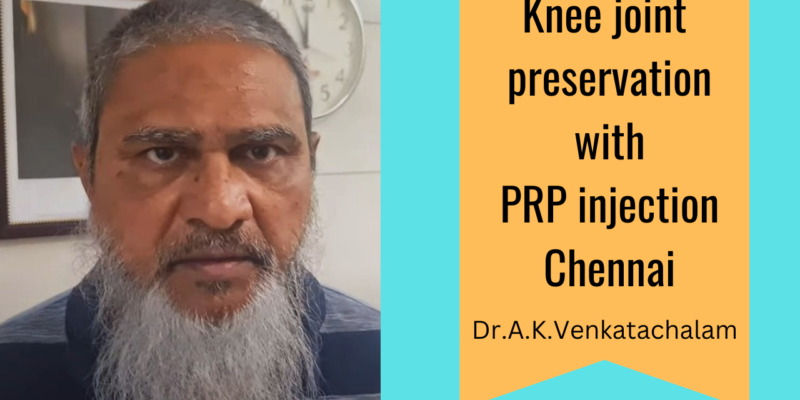
Knee joint preservation with PRP injection in Chennai

Knee joint preservation with PRP injection in Chennai

Knee joint preservation with PRP injection in Chennai.

See how a Maldivian patient got relief with PRP injections in Chennai to both knees. He was instantly relieved of his pain and could walk without any pain. He had been suffering from pain for the last 12 years. He didn’t want to undergo a knee replacement as he wanted to kneel and pray five times a day. He was influenced by the recommendation of a former patient who had undergone autologous chondrocyte implantation previously. PRP is a biologic injection that alleviates pain and restores mobility.

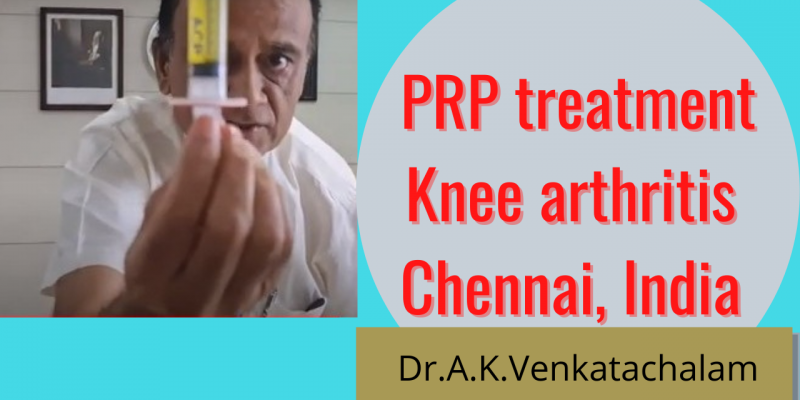
PRP therapy knee arthritis Chennai

PRP treatment Knee osteo-arthritis Chennai Dr.A.K.Venkatachalam

This gentleman underwent PRP treatment for knee osteo-arthritis in Chennai by Dr.A.K.Venkatachalam. He had undergone stem cell treatment for both his knees earlier three years ago. Although the pain wasn’t severe, he was developing mild discomfort which he wanted to put an end to. He had noticed a decline in function recently and wanted to improve his walking time.If you need PRP treatment.
in