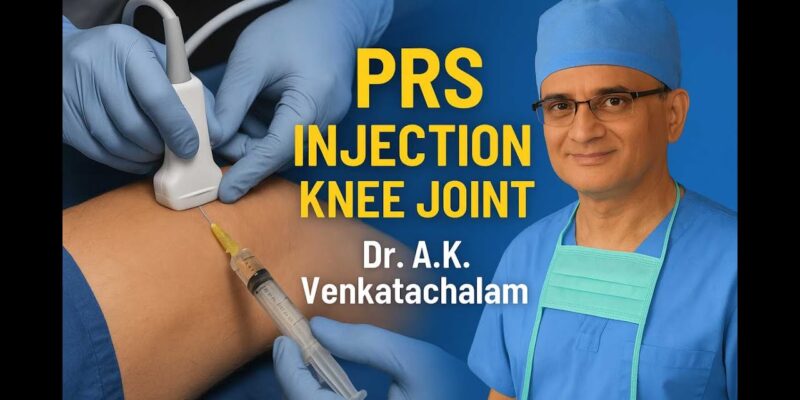
Platelet-Rich Plasma (PRP), Bone Marrow Aspirate Concentrate (BMAC), and adipose-derived tissue Stromal Vascular Fraction (tSVF) are autologous orthobiologics—preparations derived from your own body—used to help manage symptoms of knee osteoarthritis. They are not interchangeable, and none of them can be promised to regrow lost cartilage. Instead, they differ in their biological composition, their role in modifying the joint microenvironment through paracrine signaling, and whether they are placed into the joint space or the bone beneath the cartilage.
Quick Comparison: PRP vs. BMAC vs. Adipose Tissue (tSVF)
| Feature | Platelet-Rich Plasma (PRP) | Adipose-Derived Stromal Tissue (tSVF) | Bone Marrow Aspirate Concentrate (BMAC) |
|---|---|---|---|
| Source | Peripheral venous blood | Subcutaneous fat (adipose tissue) | Bone marrow (typically from the pelvis/iliac crest) |
| Primary biological role | Delivers concentrated platelets and growth factors to modulate joint inflammation | Provides living stromal cells within their intact native extracellular matrix, supporting structural context and paracrine signaling | Provides bone-marrow-derived cells, platelets, and signaling molecules that may support the bone and joint environment |
| Typical delivery route | Intra-articular (into the joint cavity) | Intra-articular (into the joint cavity) | Intra-articular and/or intra-osseous (into the subchondral bone) |
| Primary target | Joint fluid and synovial lining | Intra-articular joint microenvironment | Subchondral bone (for example, bone marrow lesions/edema) and, in some protocols, the joint space |
| Common clinical context | Early-to-moderate symptomatic knee OA; standalone or combined | Moderate-to-severe knee OA where tissue matrix and paracrine signaling are considered | Knees with subchondral bone stress or bone marrow lesions on MRI |
Watch: PRP & Stem Cells for Knee Arthritis — Is the Science Real?
This video discusses the evidence and distinctions between PRP, tissue SVF, and bone marrow treatments.
How Does Platelet-Rich Plasma (PRP) Work in Knee Osteoarthritis?
PRP is prepared by drawing a sample of your blood and concentrating the platelets into a smaller volume of plasma. When injected into the knee joint, platelets release signaling proteins (growth factors and cytokines) that interact with the synovial lining and joint fluid.
The goal of PRP is not to rebuild worn cartilage, but to shift an inflamed, catabolic joint environment toward a calmer, less painful state. However, PRP is not a single uniform product. Outcomes depend on platelet dose, preparation method, and the stage of arthritis. In moderate-to-severe osteoarthritis—especially when pain is also coming from the bone beneath the cartilage—a single intra-articular PRP injection may provide only brief or partial relief.
Read more: Why PRP Injections Sometimes Fail in Knee Osteoarthritis
What Is Adipose-Derived Stromal Tissue (tSVF)?
Adipose tissue (body fat) is not just energy storage; it is rich in perivascular stromal cells, endothelial cells, and signaling factors embedded in a natural connective-tissue framework.
In clinical orthobiologics, it is important to distinguish between enzymatically isolated fat cells and mechanically processed tissue Stromal Vascular Fraction (tSVF). Tissue SVF preserves stromal cells within their native extracellular matrix rather than enzymatically isolating them from that matrix. When placed into the knee joint, tSVF acts through paracrine signaling—communicating with local joint tissues to help regulate chronic inflammation—while preserving the native tissue architecture.
What Is Bone Marrow Aspirate Concentrate (BMAC) Used For?
BMAC is obtained by aspirating a small volume of bone marrow—usually from the pelvic bone under local anesthesia or sedation—and concentrating its cellular and platelet fractions.
While BMAC can be injected into the joint space, one distinct clinical role studied in knee osteoarthritis is intra-osseous (subchondral) delivery. Osteoarthritis is a whole-organ condition: when cartilage thins, the subchondral bone directly beneath it absorbs abnormal mechanical load and may develop bone marrow lesions (often reported as bone marrow edema on Indian MRI scans). A standard intra-articular injection does not deliver material directly into the subchondral bone; studies of bone-directed delivery therefore address a different anatomical target.
Read more: Can Bone Marrow Lesions Heal?
Which Orthobiologic Is Better—or Do They Target Different Layers?
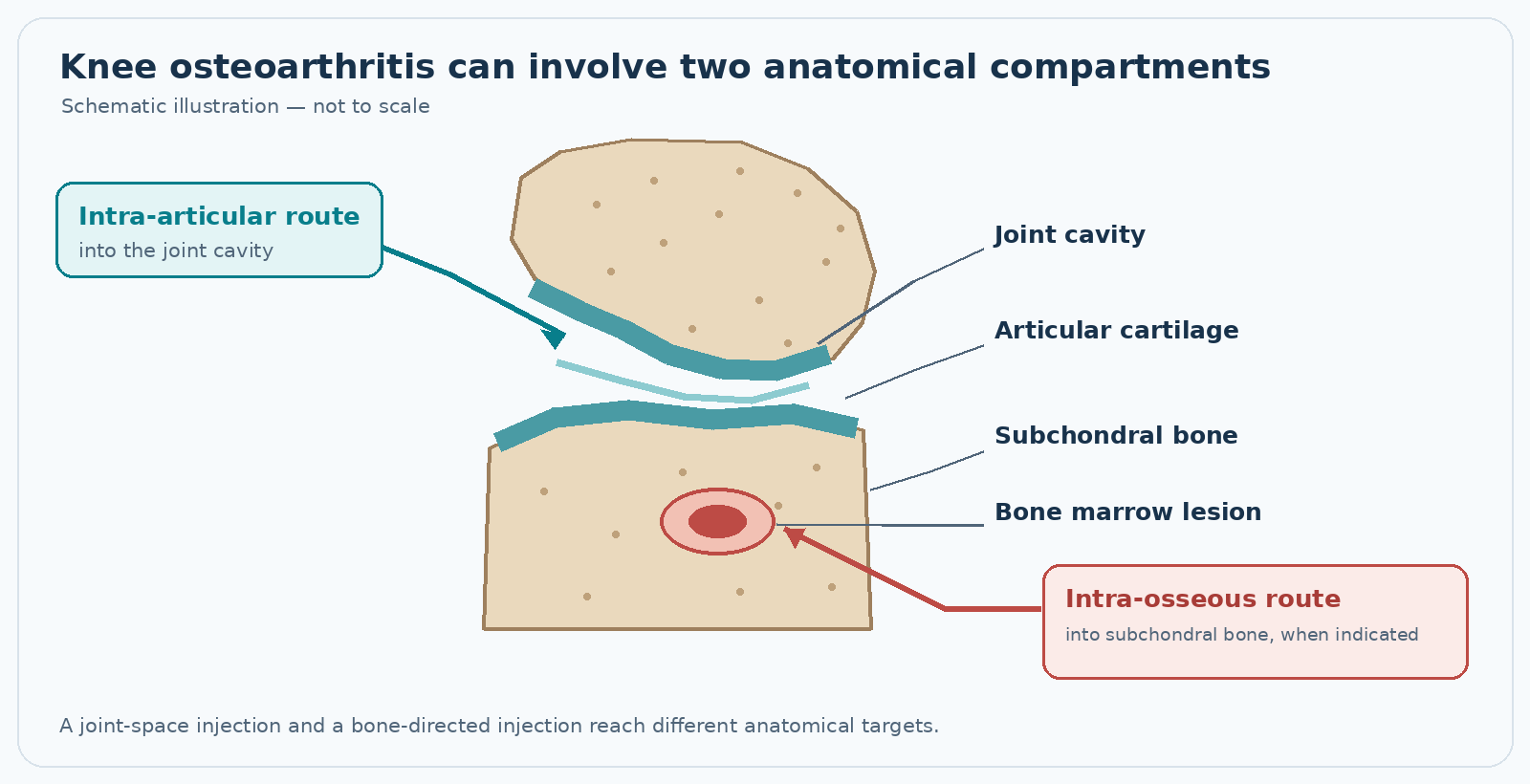
Patients often ask whether PRP, BMAC, or fat-derived tissue is the “best” injection for knee arthritis. Framing them as competing products misses how knee osteoarthritis can involve different tissues.
- The joint cavity (synovium and joint fluid) may be affected by inflammatory mediators and cartilage-degrading enzymes.
- The subchondral bone beneath the cartilage may be affected by mechanical overload, altered blood flow, and bone marrow lesions.
Because these are separate anatomical compartments, a treatment aimed only at the joint space may not address findings in the underlying bone. At Madras Joint Rejuvenation Centre, the PRASAD™ (Platelet Rich Adipose Stromal Advanced Derivative) pathway was structured around this multi-compartment biology—combining intra-articular tSVF and leukocyte-poor PRP with subchondral BMAC when clinical examination and MRI findings indicate involvement of both layers. In selected knees with high intra-articular inflammation, an autologous Alpha-2-Macroglobulin (A2M) preparation (A-Kavach™) derived from platelet-poor plasma may also be used intra-articularly prior to the procedure.
Combining biological modalities is a clinical strategy based on targeting multiple possible pain generators; it is not a guarantee of success, and suitability is determined only after an individual assessment.
Explore the protocol: PRASAD™ Knee Preservation Pathway
Can Any of These Injections Regrow Cartilage or Replace Knee Replacement?
No. At present, neither PRP, BMAC, nor adipose-derived tSVF can be promised to reliably regrow normal hyaline cartilage or reverse advanced structural osteoarthritis.
The realistic goals of non-surgical orthobiologic care are pain reduction, improved walking and daily function, and potentially delaying or avoiding total knee replacement (TKR) in appropriately selected patients. When a knee has severe mechanical deformity, gross instability, or structural collapse—and pain remains disabling despite well-structured non-surgical care—joint replacement remains a reasonable and well-established operation.
Read more: Grade 3 and Grade 4 Knee Osteoarthritis: Treatment Without Surgery?
Frequently Asked Questions
Is BMAC better than PRP for knee osteoarthritis?
Not automatically. Clinical trials comparing intra-articular BMAC against other joint injections have shown mixed results. BMAC’s distinct role may be relevant when MRI shows subchondral bone marrow lesions and the treatment plan includes delivery into the bone (intra-osseous), rather than only into the joint space.
Are adipose tissue (tSVF) and BMAC “stem cell cures”?
No. Calling these treatments a “stem cell cure” is inaccurate and misleading. They are autologous orthobiologic preparations that may act through paracrine signaling—helping modulate the local inflammatory and biochemical environment—rather than by turning into new cartilage.
How do I know which orthobiologic is right for my knee?
The choice cannot be made from an X-ray grade or a phone call alone. It requires correlating your symptoms, physical examination, standing X-rays, and—when clinically indicated—a 3-Tesla MRI to assess whether findings involve the joint space, the subchondral bone, or both.
In-Person Knee Evaluation in Chennai
Treatment suitability depends on physical examination alongside imaging. During an in-person consultation at Madras Joint Rejuvenation Centre (Kasthuri Hospital, West Tambaram, Chennai), Dr. A.K. Venkatachalam reviews your standing X-rays, MRI findings, metabolic health, and functional goals together to discuss whether conservative care, an orthobiologic pathway, or a surgical opinion is the most appropriate next step.
Learn how evaluations work: Knee Preservation Assessment
For in-person appointments at Kasthuri Hospital, West Tambaram, Chennai: 095661 43108
Selected References
- American Academy of Orthopaedic Surgeons. Management of Osteoarthritis of the Knee (Non-Arthroplasty), Clinical Practice Guideline. 2021.
- Di Martino A, et al. Leukocytes Do Not Influence the Safety and Efficacy of Platelet-Rich Plasma Injections for the Treatment of Knee Osteoarthritis: A Double-Blind Randomized Controlled Trial. Am J Sports Med. 2024.
- Boffa A, et al. Bone marrow aspirate concentrate injections provide similar results versus viscosupplementation up to 24 months of follow-up in symptomatic knee osteoarthritis: a randomized controlled trial. Knee Surg Sports Traumatol Arthrosc. 2022;30:3958–3967.
- Hernigou P, et al. Subchondral bone or intra-articular injection of bone marrow concentrate in bilateral knee osteoarthritis: a randomized study with 15-year follow-up. Int Orthop. 2021;45:391–399.
- Kon E, et al. Combined subchondral and intra-articular injections of bone marrow aspirate concentrate provide stable results up to 24 months. Knee Surg Sports Traumatol Arthrosc. 2023;31:2511–2517.
Education note: This article is for general medical education. It does not diagnose an individual knee or replace an in-person clinical consultation. Treatment suitability and individual response vary.