
>
Shared with the patient’s written consent. This is one patient’s experience and does not predict another person’s result.
Starting point
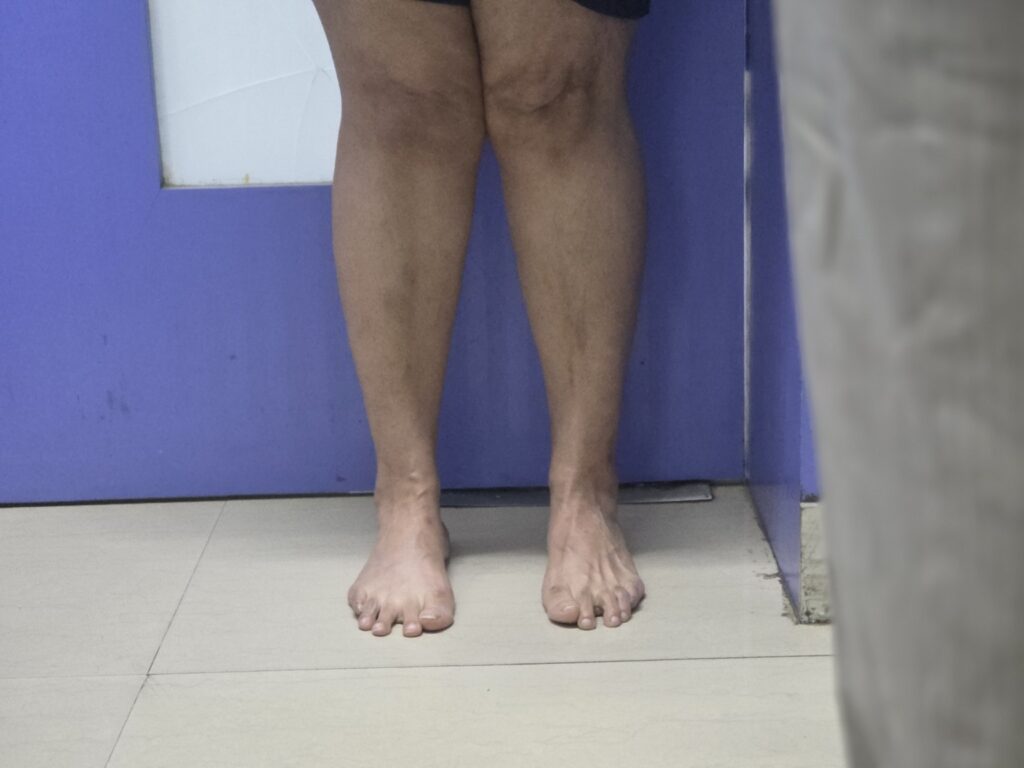
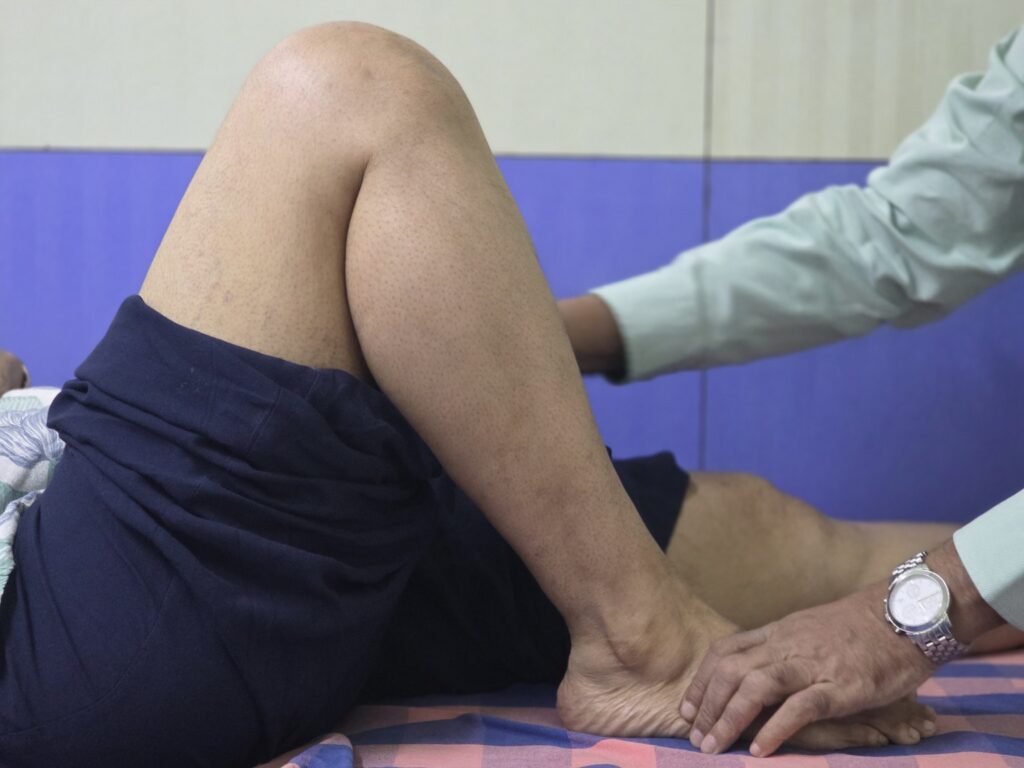
The patient had long-standing, childhood-onset bilateral genu valgum. The right-sided deformity had become more pronounced after a lateral meniscectomy. At review, the intermalleolar distance was 12 cm; the valgus alignment remained present.
Treatment and follow-up
In 2025, the patient underwent bilateral joint-preserving treatment using the PRASAD approach: intra-articular leukocyte-poor platelet-rich plasma (LP-PRP) with mechanically isolated adipose tissue stromal vascular fraction (tSVF), and intraosseous bone marrow aspirate concentrate (BMAC) with LP-PRP, followed by rehabilitation.
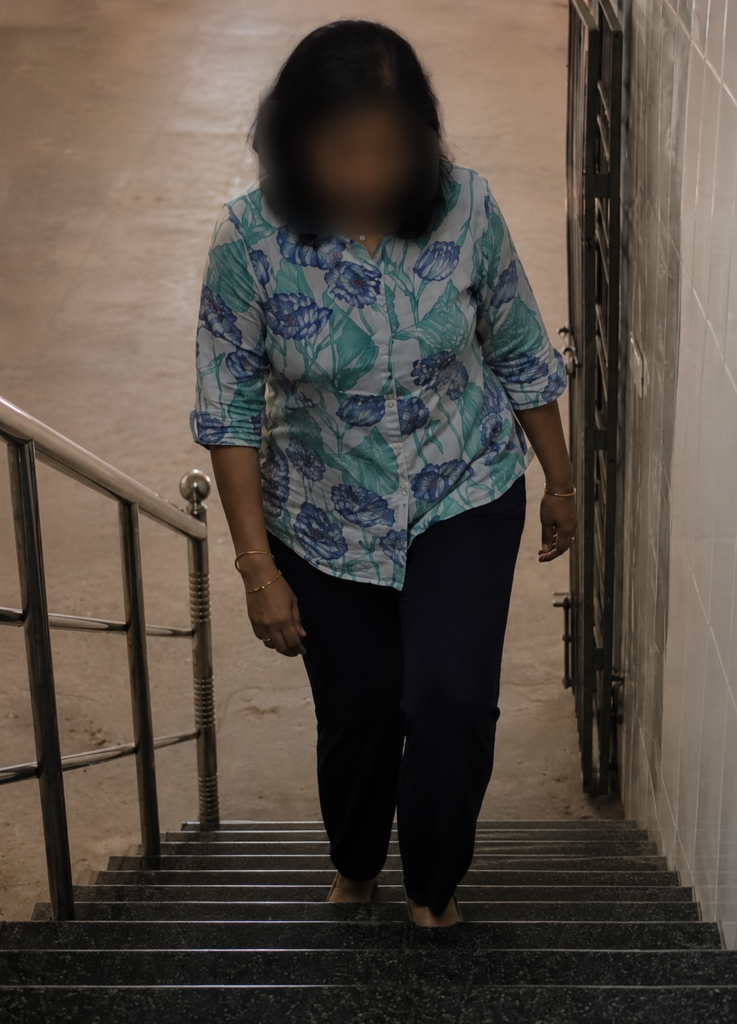
At the reported 14-month follow-up, the Apley-derived pain grade was 0. The patient walked normally, climbed stairs, and descended them with smooth control. The 12 cm intermalleolar distance was unchanged, so the improvement in pain and function was not accompanied by correction of the valgus alignment.
Patient-reported scores
Questionnaire scores for both knees together changed as follows:
| Measure | Recalled before treatment | At follow-up |
|---|---|---|
| IKDC | 51.7 | 67.8 |
| KOOS pain | 53 | 86 |
| KOOS symptoms | 64 | 82 |
| KOOS activities of daily living | 74 | 90 |
| KOOS sport/recreation | 60 | 60 |
| KOOS quality of life | 50 | 63 |
How to interpret these scores: the pretreatment scores were reconstructed from the patient’s recollection at the 30 October 2026 follow-up; they were not recorded prospectively and may be affected by recall bias. The scores describe both knees together. The responses also recorded some residual intermittent symptoms and activity difficulty; the sport/recreation score was unchanged.
This is an individual follow-up after a combined treatment and rehabilitation programme. It cannot identify the effect of any single component or establish cartilage regeneration.